



ShipFinder provides real-time container ship tracking through terrestrial and satellite AIS. Check the latest reported position and ETA of the vessel carrying your container, review its route and port calls, and receive alerts for key movements.
To get started, you'll need the vessel's name, IMO number or MMSI. If your shipment involves a change of vessels, make sure you are following the ship assigned to the current leg.
Before You Start: Identify the Vessel Carrying Your Container
Confirm the Vessel for the Current Leg
Check your carrier's tracking service, shipping records or freight forwarder’s updates for the vessel carrying your container. Note its name and, where available, its IMO number or MMSI.
For shipments involving transshipment, confirm the vessel for the current stage of the journey. The ship that departed the origin port may hand the container over to another vessel at an intermediate port.
Container Ship Tracking vs. Container Tracking
These services answer different questions:
| Tracking type | What it shows |
|---|---|
| Container ship tracking | A vessel's reported position, movements, destination and port calls |
| Container tracking | Transport milestones associated with a specific container |
For example, Maersk's container tracking guidance describes updates at key stages, such as loading onto a vessel or arriving at a port.
Use both sources to follow your shipment. A ship's arrival does not, by itself, confirm that your container has been discharged, cleared through customs or made available for collection.
How to Track a Container Ship with ShipFinder
Step 1: Open ShipFinder
Open the ShipFinder vessel map to begin your search. Create a free account when you want to organize vessels for ongoing monitoring or activate satellite tracking.
Step 2: Search by Vessel Name, IMO Number or MMSI
Enter the vessel's name, IMO number or MMSI and select the matching result. Check its MMSI or IMO number against your shipping information, especially when the search returns ships with similar names.
If your carrier changes the vessel assignment, update the ship you follow.
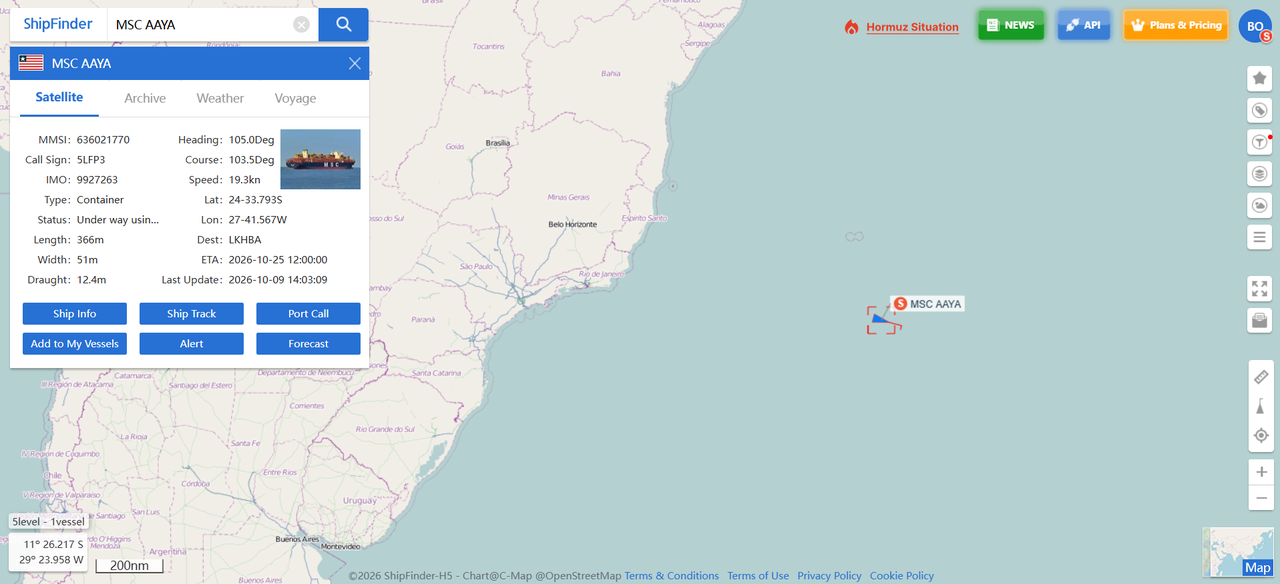
Step 3: Check the Latest Position, Destination and ETA
Open the vessel information panel and review these details:
Position and report time: Where the vessel was last reported and how recent the report is.
Speed and course over ground: How fast it was moving and in which direction.
Destination and ETA: Its reported destination and estimated arrival time.
Always read the position alongside its timestamp. Also check which port the ETA refers to: the vessel's reported destination may differ from your container's planned discharge port.
For a broader introduction to the available tools, see how to track vessel movement with ShipFinder.
Step 4: Review Historical Tracks and Recent Port Calls
Use historical information to understand how the ship reached its latest reported position:
Historical tracks: View its recorded route over the available period.
Port calls: Check recorded port visits and arrival and departure times.
Playback: Replay the vessel's recorded movements.
Route forecast: View the predicted onward route.
Historical tracks show recorded activity; a route forecast estimates future movements. The history available depends on your plan.
These features help you follow the vessel's journey, but port calls alone do not establish whether a particular container was loaded or discharged.
Step 5: Enable Satellite Tracking for Offshore Voyages
Satellite AIS helps you follow a container ship after it sails beyond coastal receiver coverage.
Make sure your account has an available satellite tracking slot, then add the vessel to satellite tracking. Otherwise, your account may continue to display its last terrestrial AIS position while it is offshore.
The free Basic plan includes satellite AIS tracking for one designated vessel. Explore the ShipFinder plan comparison if you need to monitor more vessels or access a longer tracking history.
Follow Your Container Ship Through Each Stage of the Voyage
Check Which Port the ETA Refers To
Read the vessel's ETA alongside your carrier's shipping schedule. Confirm whether the destination shown is an intermediate call, a transshipment port or your container's discharge port.
An ETA estimates vessel arrival. It does not confirm when your container will be ready for collection. Before arranging pickup or inland transport, check the relevant carrier or terminal updates.
Update the Vessel You Follow After Transshipment
If your container changes vessels, confirm the onward vessel with your carrier or freight forwarder, then update your ShipFinder fleet management list.
Do not infer a completed transfer solely from the arrival of one ship and the departure of another. The carrier's container records are needed to confirm your shipment's progress.
Use Alerts and Fleet Lists for Ongoing Monitoring
Set alerts for vessel events relevant to your shipment, such as arrivals, departures, area entry or exit, and speed changes. Email notifications help you follow activity without repeatedly checking the map.
If you monitor several shipments on different vessels, add the relevant ships to a fleet. This keeps your monitoring list together and makes routine checks easier. For more on managing several vessels, see our guide to real-time ship monitoring for commercial fleets.
What to Check If a Container Ship's Position Has Not Updated
Check the report timestamp: Confirm when the position was last reported before drawing conclusions about the vessel's movements.
Review satellite tracking settings: If the ship is offshore, check that it has been added to satellite tracking and your account has sufficient capacity.
Consider AIS data availability: Transmission intervals, receiver coverage, signal reception and data delivery affect when new position reports become available.
An unchanged position does not necessarily mean the vessel has stopped or the shipment is delayed. Check the available information before updating your transport plans.
Start Tracking Your Container Ship
Open ShipFinder to check your container ship's latest position, route and ETA. Create a free account to explore the tracking tools and activate satellite AIS tracking for one designated vessel.
FAQ
Can I track container ships for free?
Yes. You can check container ship positions on ShipFinder for free. To receive offshore updates, create a free account and add the vessel to your satellite tracking list. The free Basic plan includes satellite AIS tracking for one designated vessel.
Can I track a container ship using a container number?
Search ShipFinder by vessel name, IMO number or MMSI. If you only have a container number, use your carrier's tracking service or contact your freight forwarder to identify the vessel carrying it.
Are container ship positions updated in real time?
ShipFinder displays the latest available AIS reports. Update intervals depend on reception, data availability and your account's tracking access. Check the report timestamp to see how recent the displayed position is.
Can I track container ships while they are offshore?
Yes. Enable satellite tracking for the vessel and confirm that your account has an available slot. The free Basic plan covers one designated vessel; paid plans support more vessels.
How do I follow my container after it changes vessels?
Confirm the onward vessel and transfer status through your carrier or freight forwarder, then search for and follow that ship on ShipFinder. Continue using the carrier's container tracking service for shipment-specific milestones.